
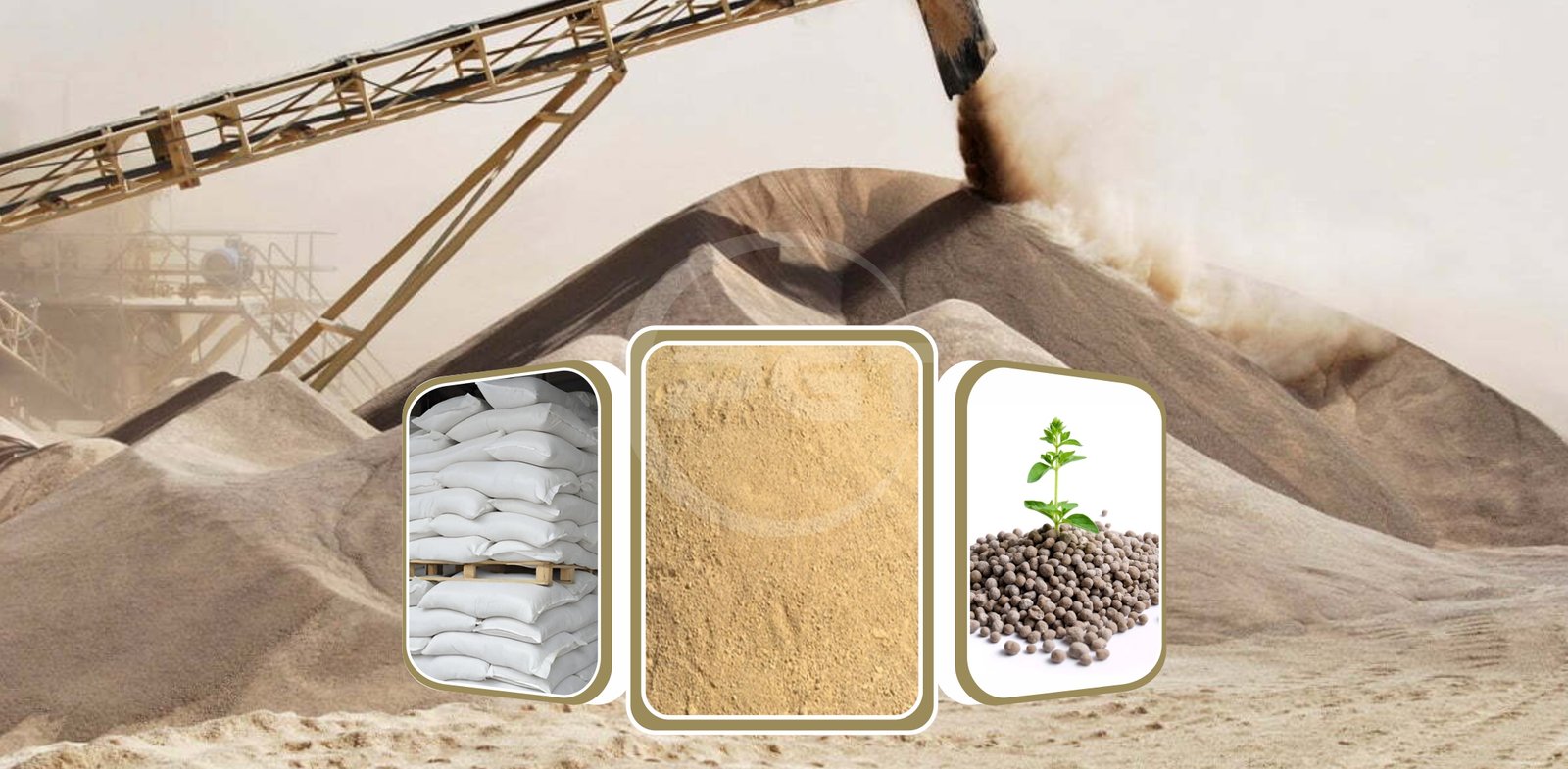
Unlocking the Power of Rock Phosphate: The Foundation of Global Agriculture and Industry
In the fast-paced world of international trade and industrial manufacturing, certain raw materials act as quiet giants. They don’t always capture the public spotlight, yet global food security and heavy industry would grind to an absolute halt without them.
At the very top of that list sits Rock Phosphate.
As a primary source of phosphorus—one of the three vital macro-nutrients required for plant growth ($N$-$P$-$K$)—rock phosphate is the literal bedrock of commercial agriculture. But its utility stretches far beyond the farm. For industrial buyers, chemical processors, and manufacturing leads, securing a high-quality, predictable supply of this mineral is an operational priority.
In this deep dive, we explore what makes rock phosphate so critical, how its chemical makeup dictates its value, and how businesses can optimize their sourcing strategies.
What Exactly is Rock Phosphate?
Rock phosphate (or phosphate rock) isn’t a single mineral; it’s a generic term for marine sedimentary and igneous rocks containing high concentrations of phosphate minerals, primarily from the apatite group.
When evaluating bulk shipments, procurement teams look at one definitive metric above all else: the $P_2O_5$ (Phosphorus Pentoxide) content. The percentage of $P_2O_5$ determines the mineral’s grade, reactivity, and ultimate commercial destination.
The Strategic Driving Force: Core Industrial Uses
While phosphorus finds its way into everything from steel production to food additives, the global market is largely driven by two massive sectors:
1. The Backbone of the Fertilizer Industry
Roughly 90% of the world’s extracted rock phosphate is utilized to manufacture chemical fertilizers. Raw phosphate rock is relatively insoluble in its natural form, meaning plants can’t digest it easily. To unlock its power, fertilizer plants process it to create highly soluble, plant-ready compounds:
- Single Superphosphate (SSP) & Triple Superphosphate (TSP): Created by treating the rock with sulfuric or phosphoric acid to drastically raise the available water-soluble phosphorus content.
- Diammonium Phosphate (DAP) & Monoammonium Phosphate (MAP): High-analysis fertilizers vital for broad-acre farming worldwide.
2. Phosphoric Acid Production
Industrial-grade rock phosphate is heavily imported for industrial “wet process” phosphoric acid production. This acid serves as a chemical intermediate for detergent builders, metal treatment agents, anti-corrosion coatings, and even specialized animal feed supplements.
What Procurement Teams Must Look for When Sourcing
Not all rock phosphate is created equal. Sourcing the wrong grade can lead to chemical inefficiencies, excessive sludge in your processing tanks, or compromised final products. When analyzing a Certificate of Analysis (COA), pay close attention to:
The $P_2O_5$ Threshold
- High-Grade ($>30\%\ P_2O_5$): Ideal for complex acidulation plants and high-analysis fertilizer production.
- Medium-Grade ($26\%\ \text{to}\ 30\%\ P_2O_5$): Highly versatile, widely used for standard blending and Single Superphosphate manufacturing.
Impurity Ratios
High levels of iron ($Fe_2O_3$), aluminum ($Al_2O_3$), and silica ($SiO_2$) can complicate chemical reactions. A reliable trading partner ensures that the “MER” (Minor Element Ratio) stays within your plant’s exact engineering limits to keep operations running smoothly.
The Sourcing Landscape: Importing Into Thriving Industrial Hubs
For rapidly expanding manufacturing landscapes—like Indonesia’s dynamic agricultural and chemical sectors—maintaining a steady stream of imported rock phosphate is essential. Industrial hubs rely on robust, predictable maritime logistics.
Because rock phosphate is moved in massive volumes, supply chains face unique challenges:
- Moisture Control: Keeping the cargo dry during cross-ocean transits to prevent clumping.
- Particle Size Consistency: Ensuring the exact mesh size or Run-of-Mine (ROM) structure requested by the processing factory.
- Strict Quality Inspections: Partnering with trusted third-party verifiers like SGS or Sucofindo at the loading port to guarantee the $P_2O_5$ content matches contractual obligations perfectly.
Securing Your Bulk Supply Chain
In the B2B chemical sector, the cheapest price per ton often hides the highest long-term risk. To insulate your production lines from market volatility, your business requires an agile trade partner capable of managing international logistics, stringent customs compliance, and tight quality standards.
At PT Prime Global Trading, we specialize in bridging the gap between top-tier global mineral reserves and industrial manufacturers. We understand that your production schedule relies entirely on predictable delivery and exact material compliance.
Ready to Optimize Your Raw Material Sourcing?
Whether you are scaling up a fertilizer plant or looking for consistent chemical intermediates, our international trade desk is here to help. Contact PT Prime Global Trading today to discuss your specification sheets, evaluate sample lots, or request a comprehensive commercial quote.